Ziki: Helping Independent Kenyan Artists Get Discovered
Designing and building a platform that cuts through the noise of global giants — giving independent Kenyan music a premium home. +13% retention after first release.
Introduction
The underground deserves better than the algorithm
Kenyan listeners streamed 180M+ hours on Spotify in 2025. The market hit $21.6M and is growing 68% annually. But here's the gap: 7/10 top songs are local, yet independent artists are almost invisible.
Ziki is a localized streaming and distribution platform built to cut through the noise of global algorithms — giving independent Kenyan music a premium home.
Results
+13% retention after first release. Artists reported feeling more "professional" sharing a Ziki link vs. a generic file-sharing URL
Project Details
-
Role
Product Designer + Lead Developer -
Platform
Web, Mobile Responsive -
Tech Stack
Vue.js, PHP, HTML5, Wavesurfer.js -
AI Tools
GPT, Blackbox (coding assists) -
Market
Kenya + East Africa
Sneak Peak
The Problem
The "Big Artist" Shadow
Independent artists face a "discovery ceiling" on global platforms — competing against million-dollar marketing budgets. Local listeners struggle to find new Kenyan talent. And existing local platforms? 2010 UI, broken players, intrusive ads.
Fragmentation
Talent exists, but no discovery layer for non-label artists.
Poor UX
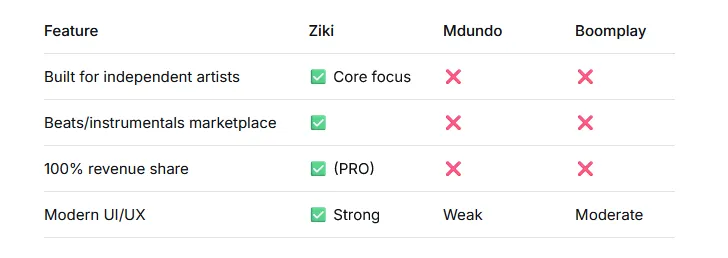
Competitors (Mdundo, Boomplay) have cluttered interfaces that lower the perceived value of the music.
The MP3 Shift
"Download and carry" culture remains vital in Kenya, yet there wasn't a premium-feeling home for it.
The Solution
A niche-first ecosystem
I designed Ziki to be more than just a player. It's a career tool. By focusing strictly on independent artists, we removed the noise of the mainstream.
Ziki isn't trying to be Kenya's Spotify. It's a career tool for independents.
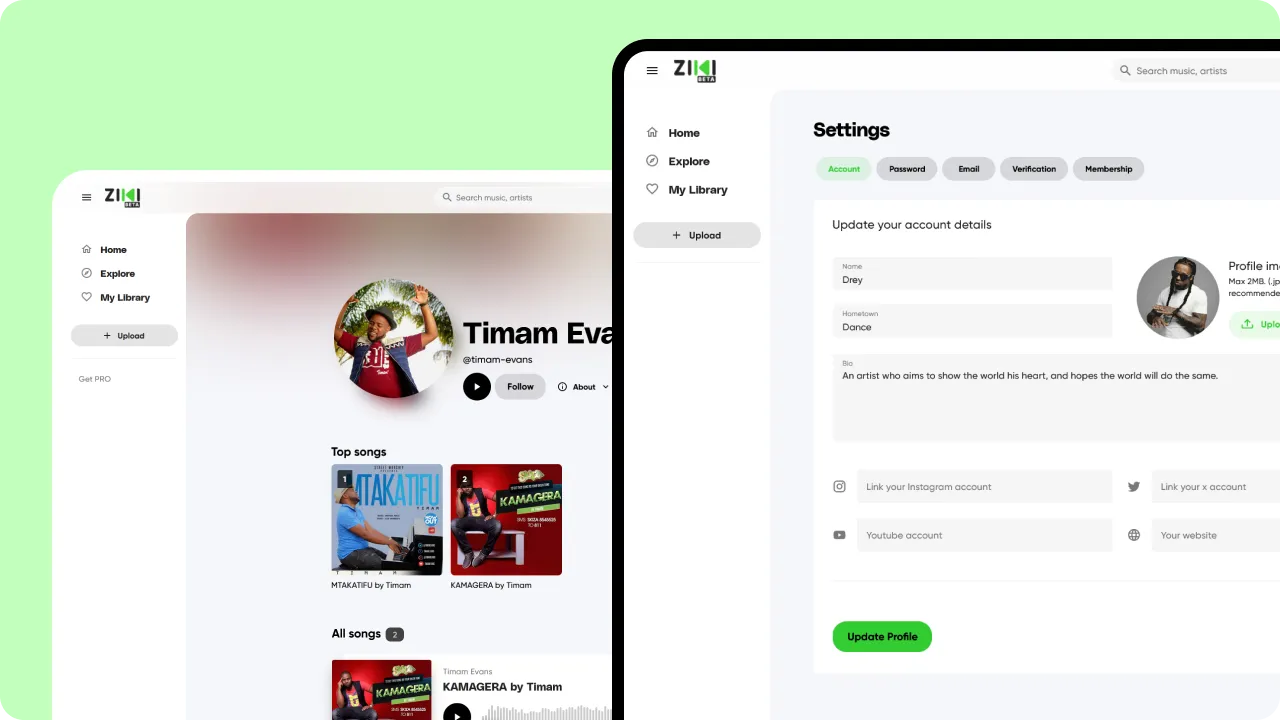
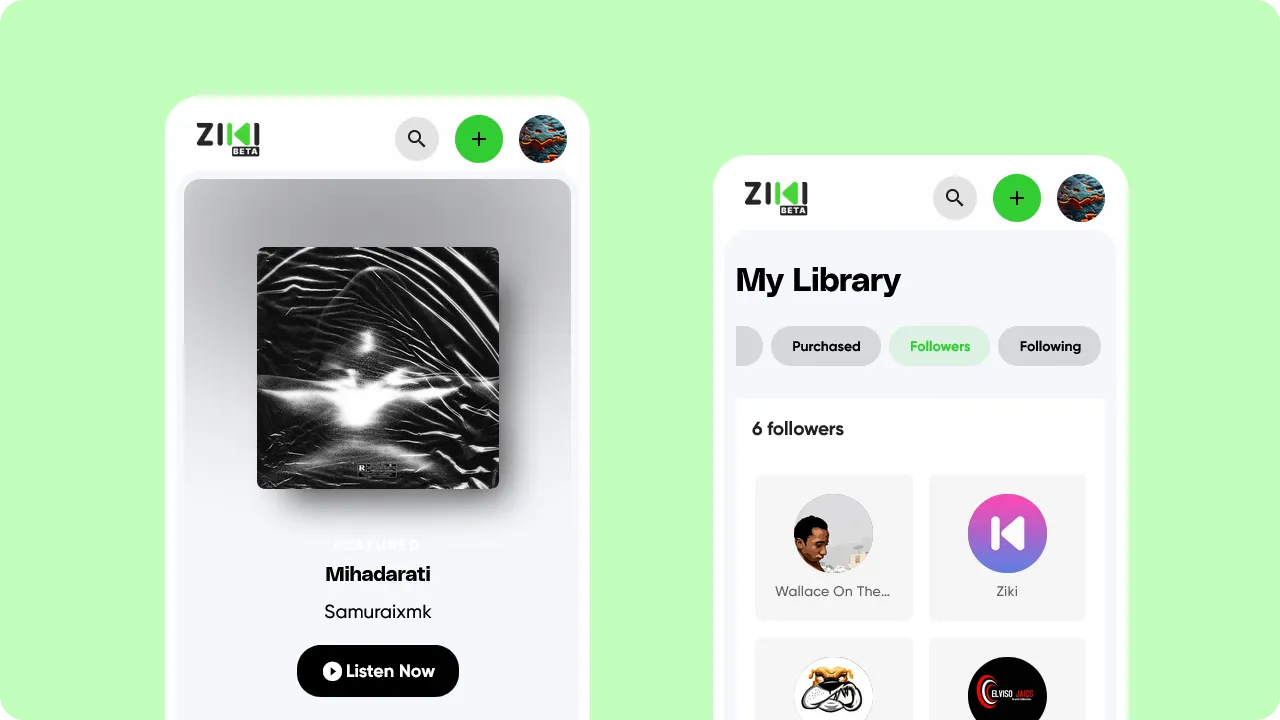
Vue.js single-page architecture so the music never stops while browsing.
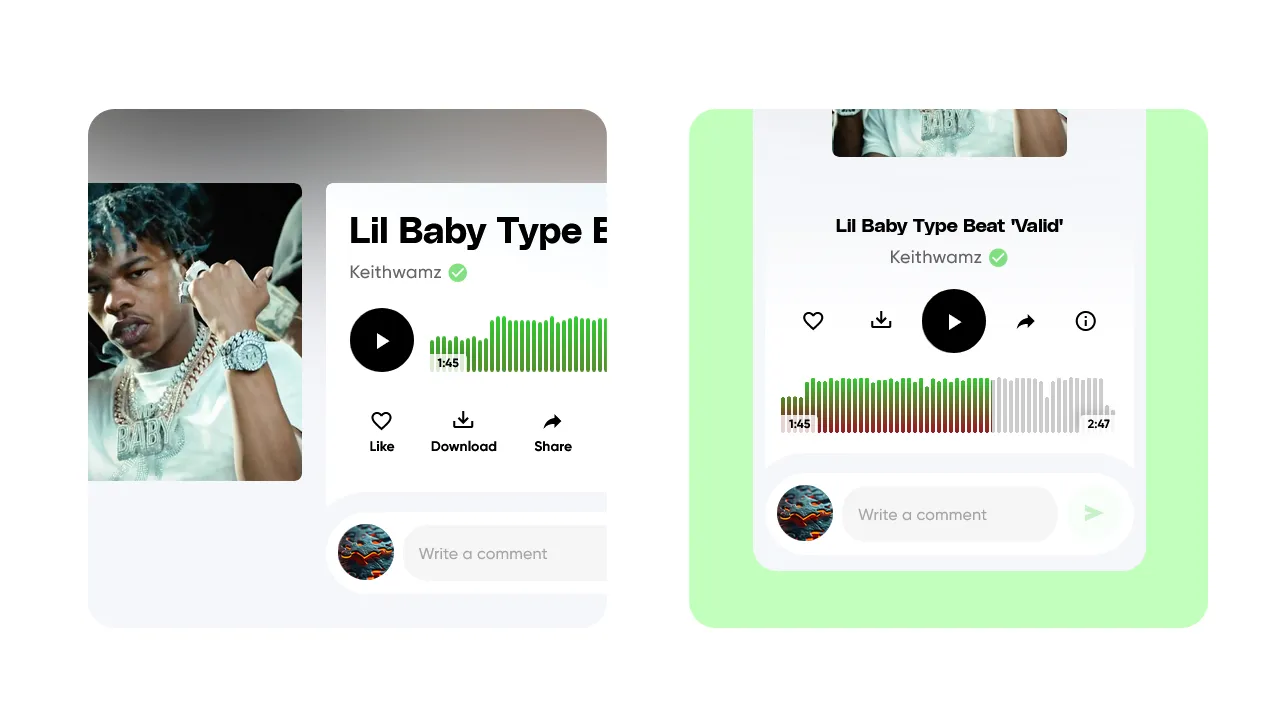
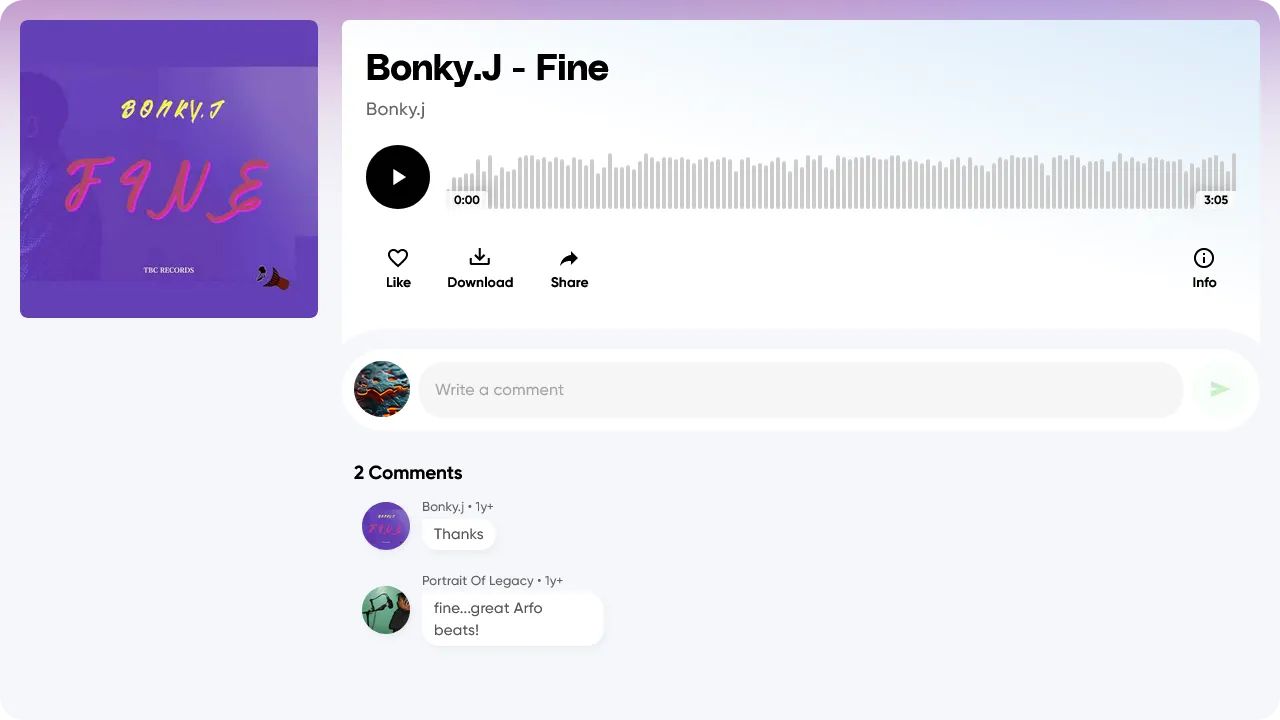
Tactile waveform visualization gives a high-end SoundCloud-like feel, tuned for mobile-first Kenyan users.
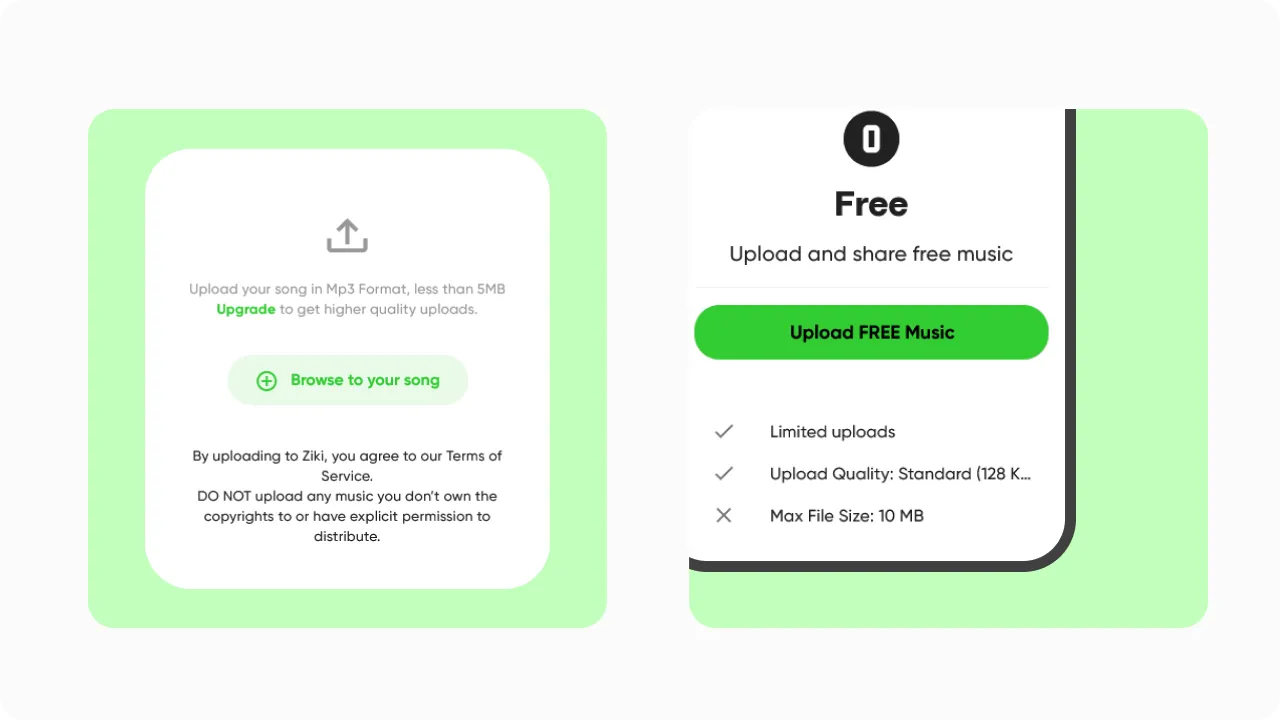
Scheduled releases, 100% revenue retention, Premium Profile Badge, "Disable Downloads" control, and the ability to hide play/like counts when low (directly from user research).
Strategic pivots (from user feedback)
Following where users led
User feedback and market analysis drove three pivots that significantly expanded scope:
- The Instrumental Pivot High search volume for beats and instrumentals turned Ziki into a resource for producers, not just listeners.
- Video Integration Music is now visual. Video upload capabilities kept users on platform longer and gave artists a content channel beyond audio.
-
Ziki PRO Suite Instant payouts + 100% revenue +
global distribution (v2).
My technical journey
How It Was Built
"I'm a product designer who codes. Ziki was built by leaning into that honestly."
Building Ziki required a hybrid approach — Photoshop for visual language, Vue.js for the reactive interface, PHP for the backend, and AI tools (GPT + Blackbox) acting as junior developers for debugging and boilerplate.
The workflow: design a feature → describe it to AI → review/edit code → test with real users. The bottleneck shifted from writing code to making good product decisions.
Custom SEO tools ensure that when an artist uploads a track, it ranks on Google — giving them the "discovery" the platform promises.

What Shipped
Results & Impact
- +13% retention after an artist's first release
- Premium Profile Badge + Custom Profile Pages significantly increased retention among the top 10% of creators
- Artists felt more "professional" sharing a Ziki link vs. a generic file-sharing URL
Competitive advantage
Winning on experience
Ziki ✓
- Clean, dark-mode aesthetic
- Intuitive navigation
- Creator-centric tools (PRO tier)
- Mobile-first responsive
- SEO-optimised artist pages
Competitors
- Intrusive ads mid-playback
- "Busy" 2010-era layouts
- Broken mobile experience
- No creator monetisation tools
- No SEO architecture
Honest Reflections
Challenges and headwinds
AI-generated music from platforms like (Suno, Udio) has flooded the market, making it harder to verify "human" independent talent.
Convincing artists to move from YouTube's "safety" requires constant value demonstration.
As data becomes cheaper, MP3 demand is shifting to pure streaming — requiring a monetisation model rethink.
Music stays only on Ziki. V2 requires distribution to Spotify/Apple, etc to avoid being a dead-end for artist careers.

Honest Learnings
What building Ziki actually taught me.
Niching down is a strategy, not a retreat
The temptation was always to make Ziki broader: add more genres, more user types, more content. The times I held the line on the independent artist focus were the times the product got clearer and more compelling.
User research changes what you build
Running surveys before building PRO features meant I didn't build the features I assumed artists wanted. I built the features they actually asked for. The difference matters.
Design quality is a trust signal
Artists made decisions about whether to use Ziki partly based on whether it looked like something they weren't embarrassed to share. A clean, modern interface wasn't vanity — it was a conversion tool.
AI tools changed what a solo builder can do
Using ChatGPT and Blackbox for coding meant I could build something that would previously have taken a small team. The bottleneck shifted from writing code to making good product decisions.
Distribution is the missing piece
The single biggest platform limitation is that music stays on Ziki. Building distribution to major platforms would change the value proposition significantly and is a key next step.
You don't need permission to ship
Ziki exists because I built it. The market gap was real, the tools were available, and the constraints of being a solo builder with design skills were worth working within. Starting was the hardest part.
What's Next
- AI integration (Discovery, algorithm, etc)
- Distribution to Spotify/Apple Music (closing the island effect)
- Deeper beats marketplace with licensing options